Dostoevsky Made Me Cry on the Subway and I've Never Felt More Alive
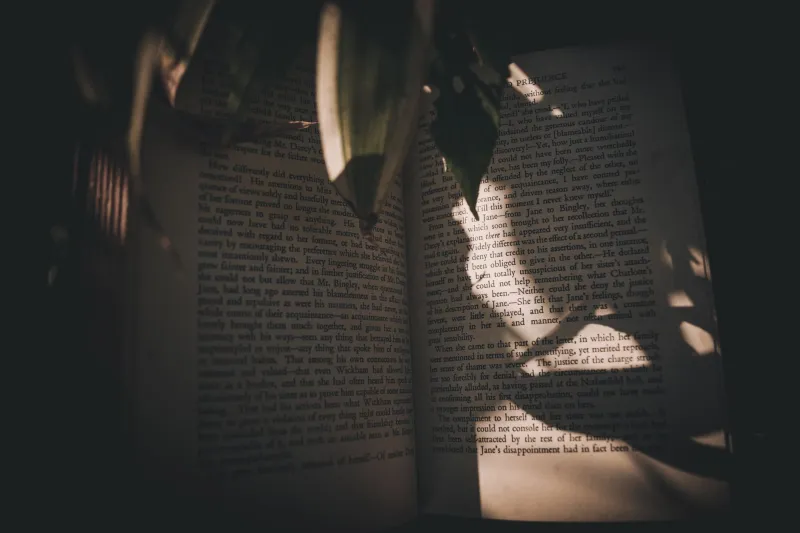
Somewhere between 42nd Street and Times Square, a woman in her late twenties is ugly-crying into a paperback copy of Crime and Punishment. Nobody on the train looks surprised. Maybe they've been there. Maybe they've felt that specific, chest-hollowing sensation that only Dostoevsky seems capable of producing — the feeling that someone, somehow, from 19th-century St. Petersburg, has looked directly into your soul and described it better than you ever could.
This is the Russian literature experience. And Americans, increasingly, cannot get enough of it.
We Were Sold Happiness. Russia Sold Us Something Better.
Let's be honest about the American cultural default for a second. We are a country that invented the self-help section of the bookstore. We put motivational quotes on coffee mugs. We are deeply, almost pathologically, committed to the idea that things can be fixed, optimized, and resolved with the right mindset and maybe a good morning routine.
Russian literature walks into that worldview and quietly, devastatingly, disagrees.
When Tolstoy opens Anna Karenina with the observation that all happy families resemble each other but every unhappy family is unhappy in its own way, he isn't setting up a problem to be solved. He's making a philosophical statement: suffering is specific, personal, and worth examining. That's a radically different proposition than anything you'll find in the wellness aisle at Target.
And here's the thing — American readers are responding to it in massive numbers. Crime and Punishment consistently ranks among the most-assigned novels in U.S. universities. BookTok creators devoted to Russian lit have racked up millions of views. Penguin Classics can barely keep Tolstoy in print. Something is clearly resonating.
The Word Americans Don't Have (But Desperately Need)
If you've spent any time on this site, you've probably come across the Russian concept of тоска (toska) — that untranslatable ache, a longing with no clear object, a spiritual restlessness that English simply doesn't have a clean word for. Nabokov once described it as "a longing with nothing to long for."
Russian literature is essentially a 200-year extended meditation on toska and its cousins. The existential weight carried by characters like Raskolnikov, the quiet desperation of Chekhov's provincial heroes, the doomed romanticism of Turgenev's protagonists — all of it circles around emotional states that Western pop culture tends to treat as problems requiring immediate solutions.
But what if they're not problems? What if they're just... the texture of being human?
That reframe is where Russian literature quietly blows the doors off American literary convention. It doesn't pathologize suffering. It doesn't rush to resolution. It sits with you in the dark and says, yes, this is real, and it matters, and we're going to look at it together.
Why This Hits Different in 2025
There's a generational element at play here that's worth naming. Millennials and Gen Z readers grew up watching the self-help industrial complex promise transformation that never quite arrived. The productivity hacks, the gratitude journals, the relentless positivity of Instagram culture — and then reality, which is complicated and messy and doesn't care about your vision board.
Russian literature validates that experience without condescending to it. When Raskolnikov spirals through guilt and paranoia in Crime and Punishment, Dostoevsky isn't asking you to fix him. He's asking you to understand him — to trace the logic of a broken mind with enough precision that you recognize something of yourself in it. That's not depressing. That's profound.
Same goes for Anna Karenina's impossible situation, or the paralyzed idealism of characters in Turgenev's Fathers and Sons, or the gentle absurdity of nearly everything Chekhov ever wrote. These stories aren't tragedies in the Hollywood sense, where tragedy means something went wrong. They're tragedies in the classical sense — where suffering reveals truth.
The "Beautiful Sadness" Americans Are Finally Embracing
There's a phrase that pops up again and again when American readers talk about Russian literature: beautifully sad. It shows up in Goodreads reviews, Reddit threads, college essays. People feel it but struggle to articulate it.
What they're describing, without necessarily knowing the term, is something close to the Russian aesthetic concept of душа — soul. The idea that art, music, and literature should reach into the deepest part of a person, not just entertain the surface. Russian writers weren't trying to make readers comfortable. They were trying to make them feel known.
In a cultural moment when Americans are increasingly exhausted by content designed purely for engagement — the dopamine hit, the share, the quick emotional payoff — there's something almost countercultural about sitting with The Brothers Karamazov for 800 pages. It requires patience. It rewards depth. It treats the reader as someone capable of handling complexity.
So What Do We Do With All This Beautiful Suffering?
Read more of it, honestly. Start with Chekhov's short stories if Dostoevsky feels like too much of a commitment — they're shorter, funnier in a bleak way, and deeply human. Work your way up to Tolstoy. Let yourself feel whatever comes up without immediately trying to fix it or reframe it positively.
That's the lesson Russian literature has been trying to teach American readers for decades: not every feeling needs to be resolved. Some of them just need to be witnessed. And sometimes, the most healing thing in the world is a 19th-century Russian novelist who looked at the full catastrophe of human existence and said — да, я вижу тебя. Yes, I see you.
Welcome to Мой Мир. Pull up a chair. This might take a while. That's kind of the point.