Sit Down, Eat More: Surviving the Glorious Chaos of Russian Hospitality
You Said You Weren't Hungry. They Heard Something Else.
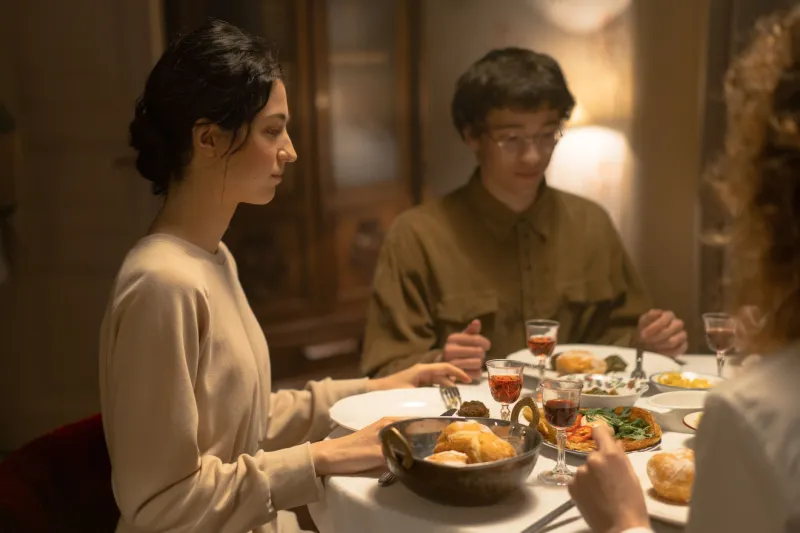
Imagine this: You've been invited to a Russian friend's apartment for what was described as "just tea." You arrive to find the table covered end to end with food. Salads. Cold cuts. Pickles. Bread. A full pot of something that smells incredible. Pastries. A cake. More pickles.
You politely say you're not that hungry — maybe just tea would be great, thanks. Your host looks at you with an expression somewhere between confusion and mild offense, then places a plate in front of you anyway.
Congratulations. You've just had your first encounter with гостеприимство (gostepriimstvo) — and you're going to need to pace yourself.
What Is Гостеприимство, Exactly?
The word breaks down simply enough: гость (gost') means "guest," and the suffix builds it into something closer to "the state of welcoming guests." But that clinical definition doesn't capture what the concept actually means in practice.
In Russian culture, hosting isn't just something you do — it's something you perform, in the best possible sense. A guest arriving at your home is an event. It demands preparation, abundance, and a level of generosity that can genuinely overwhelm people who didn't grow up with it. The table must be full. The guest must be fed. And crucially, the guest's claims of fullness are not taken at face value.
This isn't rudeness. It's a deeply embedded cultural script in which refusing food is understood as politeness theater — a formality that hosts are expected to push through on your behalf. When you say "no thanks," your Russian host hears: "please offer again." When you say "really, I'm full," they hear: "one more small piece couldn't hurt."
The Refusal Dance Is a Two-Person Performance
Here's where Americans often hit a wall. In the U.S., when someone says they don't want something, that's a complete sentence. The answer is respected, the subject is dropped, and nobody's feelings get involved. Simple, efficient, done.
In Russian hospitality culture, refusal is the opening move in a negotiation, not a final answer. A guest who accepts everything immediately might actually seem a little forward — it's considered polite to decline at least once before accepting. The host, meanwhile, is expected to persist past that first refusal. This creates a ritual that both sides are supposed to understand and participate in.
The problem is that Americans only know their half of the script. They decline genuinely, the host persists genuinely, and suddenly an American is holding a second helping of olivier salad wondering how this happened.
Pro tip: if you truly cannot eat another bite, try "спасибо, всё было очень вкусно" (spasibo, vsyo bylo ochen' vkusno) — "thank you, everything was absolutely delicious." Complimenting the food while declining gives your host the appreciation they need without leaving anyone feeling like their hospitality was rejected.
The Soviet Pantry and the Psychology of Abundance
To understand why Russian hosts operate this way, you have to understand what scarcity actually looked like. During the Soviet era, food availability was genuinely unpredictable. Store shelves could be empty. Certain products disappeared for weeks. Families developed habits of stockpiling, preserving, and making the most of whatever they had.
When guests came, you put out everything. Not because you were showing off, but because feeding people from your own table was an act of care and connection that transcended the material. The table full of food wasn't about wealth — it was about saying: you matter enough that I prepared for your arrival.
That psychology didn't evaporate when Soviet-era shortages ended. It became woven into the cultural identity of what it means to be a good host. Today, a Russian grandmother who puts out a spread that could feed twelve people for a party of four isn't being excessive. She's being herself. She's honoring a tradition that says guests should never leave hungry, never feel like a burden, and always feel like the most important people in the room.
The Unwritten Rules Americans Should Know
If you're heading into a Russian social situation — a dinner party, a family gathering, or even a casual visit that somehow escalated — here are a few things worth knowing:
Arriving empty-handed is a faux pas. Bring something — wine, chocolates, flowers (odd numbers only, even numbers are for funerals), a nice pastry. It doesn't have to be elaborate. The gesture matters.
Complimenting the food is mandatory. Not optional, not just nice — expected. Your host put real effort into that table. Tell them it's wonderful. Tell them specifically what you loved. Watch their face light up.
The meal will take longer than you planned. Russian gatherings move at their own pace. There will be multiple courses, toasts, stories, more food, more toasts. Clear your afternoon.
"Just one more piece" will happen at least three times. Budget for it. Wear stretchy pants if necessary.
Leaving immediately after eating is considered cold. Linger. Have another cup of tea. Let the evening unfold. The visit is the point, not just the food.
Why Americans Actually Love It (Once They Adjust)
Here's the thing — once the initial culture shock fades, most Americans who experience genuine Russian hospitality come away genuinely moved by it. There's something disarming about being in a space where your presence is treated as an occasion. Where someone spent two days cooking because you were coming over. Where the message encoded in every dish on that table is: I'm glad you're here.
American social culture has drifted toward low-effort hosting — the casual hangout, the potluck, the "just grab something from the fridge." None of that is bad. But there's a particular warmth to being on the receiving end of someone who took hosting seriously, who treated your arrival as something worth preparing for.
Gостеприимство is exhausting to perform and occasionally overwhelming to receive. But it's also, at its core, one of the most generous expressions of human connection there is.
Just maybe eat a light lunch before you go.