Lost in Translation: The Wild World of Russian Keyboard Slang Americans Never Knew Existed
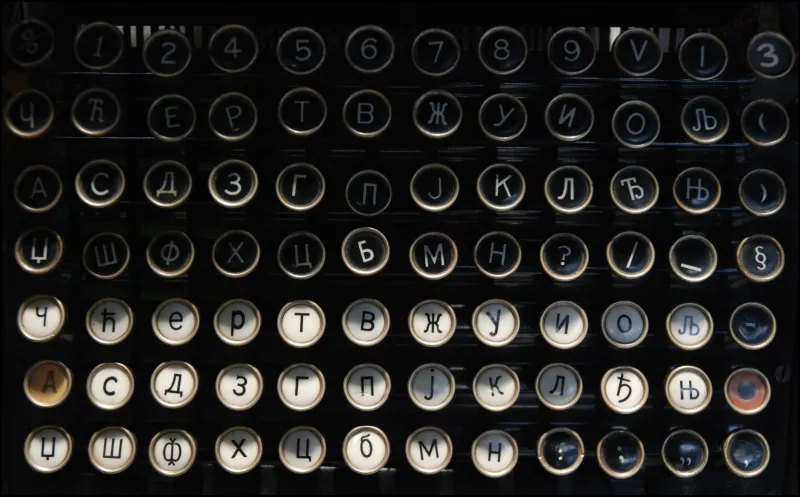
The Symbol That Started a Thousand Confused Phone Calls
Picture this: you're on a tech support call, and the representative — a recent arrival from Moscow — asks you to press the "решётка" (reshyotka) key. You stare at your keyboard. You stare at the ceiling. You have absolutely no idea what they're talking about. Meanwhile, on the other end of the line, they're equally baffled when you say "hashtag" or "pound sign."
Welcome to the weird, wonderful, and occasionally maddening world of Russian keyboard terminology — where the same little symbols you tap every day carry completely different names, histories, and cultural baggage depending on which side of the Atlantic you grew up on.
What's in a Name? Apparently, Everything
Let's start with the big one: that humble symbol sitting above the 3 on your keyboard — #.
In the US, it's been called the pound sign (thanks to its old use in weights and measures), the number sign, and more recently, the hashtag. But in Russian, it goes by решётка — which literally translates to "little grid" or "grate," like the kind you'd find on a window or a drain. Look at the symbol again. See it? Four lines forming a grid pattern. Honestly... that's kind of more accurate than "pound."
Then there's the star — * — which Americans casually call the asterisk. In Russian computing culture, it's often called звёздочка (zvyozdochka), meaning "little star." Adorable, right? While English went the academic Greek route (asteriskos = little star, technically), Russian just... said what it was. A little star. Done.
'Dead Key' and the Ghost in the Machine
Now here's where things get genuinely fascinating. The phrase мёртвая клавиша (myortvaya klavisha) — literally "dead key" — refers to what English-speaking typists call a "modifier key" or sometimes just a "dead key" too, but the concept is used very differently in everyday Russian tech conversation.
The "dead key" in Russian keyboard tradition often refers to keys that don't produce a visible character on their own but modify the next keystroke — think accent marks in older typewriter systems. Russian typewriters had a rich history of these mechanical quirks, and the terminology stuck around long after the machines themselves became museum pieces.
Marina K., a software developer who moved from St. Petersburg to Austin, Texas, about eight years ago, laughs when she remembers her first week at an American tech company. "My manager kept saying 'hit the hash,' and I kept thinking, why are we talking about food? In Russia, we say решётка. It's a grid. It makes visual sense. 'Hash' — I had to Google it three times before I believed that was the real word."
The @ Sign Has Its Own Delightful Drama
If you think # causes confusion, wait until you get to @.
In the US, it's simply "at" — functional, no-frills, very American. But in Russian internet culture, the @ symbol is affectionately called собачка (sobachka), which means... "little dog." The reasoning? If you squint at the symbol just right, the curling tail and round body supposedly resemble a small dog curled up.
This nickname isn't unique to Russian — Italians call it a snail (chiocciola), and Germans call it a spider monkey (Klammeraffe) — but there's something particularly charming about the Russian version. When you're giving someone your email address in Russia, you literally say "me, little-dog, gmail, dot, com."
Dmitri Volkov, a Russian-American language instructor based in Chicago who runs informal cultural workshops, says this is one of his favorite examples to use with students. "The sobachka thing always gets a laugh. But it also opens up a conversation about how language reflects the way people see the world. Russians looked at @ and saw a dog. Americans looked at it and saw a function. That tells you something."
A Quick Cheat Sheet for the Truly Confused
For anyone navigating Russian-American tech conversations, here's a handy translation guide for the symbols that cause the most head-scratching:
- # — American: pound sign / hashtag | Russian: решётка (reshyotka) — "little grid"
- @ — American: at sign | Russian: собачка (sobachka) — "little dog"
- * — American: asterisk | Russian: звёздочка (zvyozdochka) — "little star"
- ! — American: exclamation point | Russian: восклицательный знак (vosklitsatelny znak) — "exclamatory sign" (yes, it's a mouthful)
- & — American: ampersand | Russian: амперсанд (ampersand) — okay, this one they borrowed directly. No drama here.
Why Does Any of This Matter?
Beyond being genuinely fun cocktail party trivia, these naming differences point to something deeper about how language evolves alongside technology — and how cultural context shapes even the most mundane vocabulary.
English keyboard terminology is a patchwork of Latin, Greek, medieval accounting shorthand, and typesetter jargon. Russian keyboard vocabulary, by contrast, developed heavily during the Soviet era, when technical language was often deliberately simplified and made visually intuitive for mass literacy programs. A grid looks like a grid. A star looks like a star. A little dog looks like... well, you get the idea.
Marina puts it simply: "In Russian, we describe what we see. In English, you describe what it was used for, historically. Both make sense. They're just coming from different directions."
The TikTok Effect and Language in the Wild
Interestingly, as more Russian-American content creators build audiences on platforms like TikTok and YouTube, these little linguistic collisions are becoming their own form of entertainment. Videos breaking down "things Russians call differently" routinely rack up hundreds of thousands of views, with comment sections full of Americans discovering for the first time that the pound sign has a twin life as a little window grate somewhere across the world.
Language, it turns out, doesn't need to be taught in a classroom to spread. Sometimes all it takes is one confused tech support call — and a little dog named @.
Curious about more Russian language quirks that'll make you see everyday things differently? Stick around — Мой Мир has plenty more where this came from.