Forget Matcha Bars — The Samovar Is Having Its Moment and Americans Are Here for It
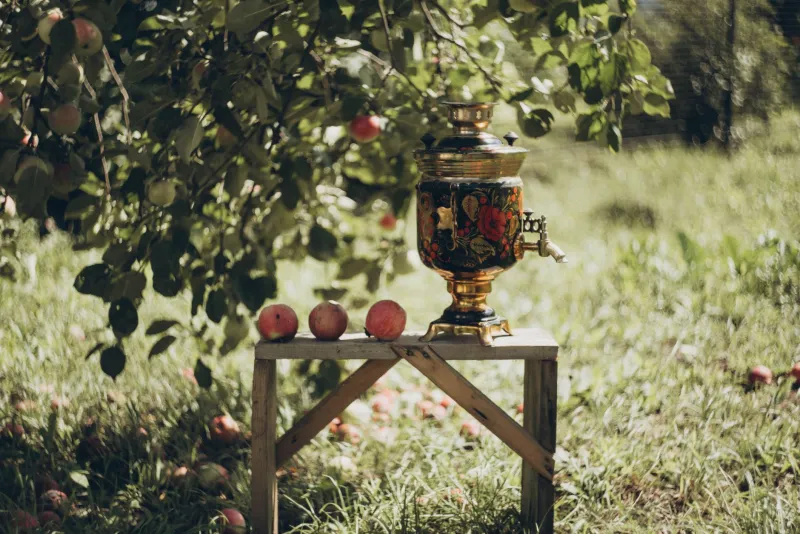
Your Coffee Routine Is Tired. Russia Has Been Doing This for 300 Years.
Let's be honest — the American morning beverage scene has gotten a little exhausting. There's always a newer, trendier drink demanding your attention and your wallet. Mushroom coffee. Adaptogen lattes. Sixteen-dollar ceremonial matcha whisked by someone named Chadwick.
But quietly, in corners of TikTok and Reddit threads dedicated to "slow living" and "cozy aesthetics," something older and far more interesting is bubbling up. Russian tea culture — with its elaborate rituals, its gorgeous copper samovars, and its deeply communal spirit — is finding a brand new audience in the United States. And no, it is not just people who watched too much War and Peace.
So What Even Is Russian Tea Culture?
When most Americans imagine "tea culture," they picture either a British afternoon spread with tiny sandwiches or a Japanese ceremony involving raked gravel and extreme silence. Russian tea culture is neither of those things — and that's precisely what makes it so compelling.
At the center of the tradition is the samovar (самовар), a heated metal urn that keeps water at a near-boil for hours. The word literally translates to "self-boiler," which is already kind of a power move. Historically, a samovar sat at the center of the table the way a fireplace anchors a living room — it was the social heart of the home. Family gathered around it. Guests were welcomed by it. Deals were struck over cups poured from it.
The actual brewing method is equally distinct. Russians make something called zavarka (заварка) — an intensely concentrated tea brew, almost syrup-like in its strength — and then dilute it to taste with hot water from the samovar. This means every person at the table controls exactly how strong their cup is. It sounds simple, but the effect is surprisingly democratic and personal at the same time.
Traditionally, the tea of choice was a smoky, robust black variety, often from Georgia (the country, not the state) or imported via the ancient Silk Road trade routes. Today, Russian households might reach for anything from classic black blends to herbal mixes featuring dried berries, linden flowers, or Ivan-chai — a caffeine-free wildflower tea that's having its own quiet revival.
The Ritual Is the Point
Here's what really separates Russian tea drinking from grabbing a Celsius on the way to a meeting: it is not meant to be efficient.
In Russian homes, serving tea is an act of hospitality so ingrained it borders on cultural obligation. You do not offer someone a cup and then go back to scrolling your phone. You sit. You talk. You refill. You eat something sweet alongside — maybe варенье (varenie), a thick homemade jam stirred directly into the tea or eaten off a spoon between sips. Maybe a piece of dark chocolate or a honey cake. The tea ritual creates a container for actual human connection, which — and bear with us here — might be something Americans are starting to desperately crave.
Sarah K., a 24-year-old in Portland who started exploring Russian tea customs after a Slavic studies elective in college, describes it this way: "I got really burned out on productivity culture. Coffee started feeling like a tool, not a pleasure. When I learned about the samovar tradition, something clicked. It's not about the caffeine. It's about having an excuse to be present with people."
She now hosts monthly "samovar evenings" with friends, complete with zavarka, a rotating selection of Russian jams, and a strict no-phones-at-the-table rule.
How to Actually Do This at Home
You do not need a 19th-century antique samovar to get started (though if you find one at an estate sale, absolutely grab it). Here is a beginner-friendly way to experience authentic Russian tea culture in your own kitchen:
Step 1: Make your zavarka Brew a very strong pot of loose-leaf black tea — think 2 to 3 teaspoons per cup of water, steeped for 5 to 7 minutes. It should look almost like espresso. This is your concentrate.
Step 2: Keep hot water ready A simple electric kettle on low works fine. The goal is water that stays consistently hot but not aggressively boiling.
Step 3: Pour and dilute Add a small amount of zavarka to your cup — maybe a quarter of the cup — then top it off with hot water to your preferred strength. Adjust every round. There is no wrong answer.
Step 4: Eat something sweet alongside This is non-negotiable, culturally speaking. A spoonful of good quality fruit jam stirred into the tea is traditional. So is a piece of dark chocolate or a simple butter cookie.
Step 5: Don't rush it Seriously. Put your phone down. This is the whole point.
For those curious about Ivan-chai specifically, it is increasingly available at Russian specialty stores in major US cities and through online retailers. It has a slightly floral, earthy flavor profile that converts a lot of herbal tea skeptics.
Why Gen Z Is Actually the Perfect Audience for This
It might seem counterintuitive — aren't younger generations all about speed and convenience? But there is a strong counter-current running through Gen Z culture right now, one that gravitates toward slowness, tactility, and rituals that feel meaningful rather than optimized.
The same generation that revived vinyl records and film photography is increasingly drawn to the idea of a beverage that requires patience, presence, and a little bit of ceremony. Russian tea culture checks every single one of those boxes, and it comes with centuries of storytelling baked right in.
Pop culture has helped too. Slavic-inspired aesthetics have been circulating through "dark academia" and "cottagecore" spaces for years. The samovar, with its ornate curves and warm glow, fits that visual language perfectly.
Мой Мир Says: Try It This Weekend
You don't need to overhaul your entire morning routine. Just set aside one afternoon, brew a strong pot of zavarka, call a friend over, and see what happens when you stop treating a hot drink like a vehicle for caffeine and start treating it like an invitation.
Russian tea culture has been doing exactly that for centuries. America, welcome to the table.