No Measuring Cups, No Problem: How Babushka's Kitchen Instincts Are Outperforming Your Favorite Recipe App
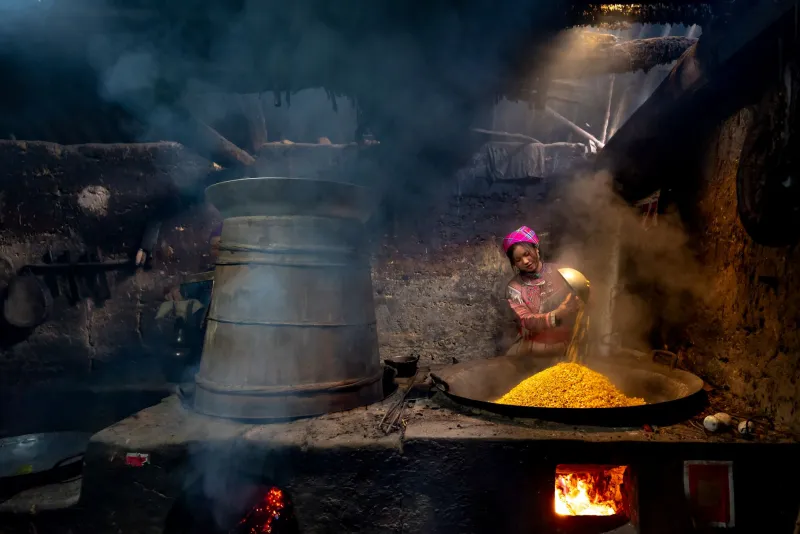
Somewhere between the third time your sourdough starter died and the moment you realized you'd spent forty-five minutes watching a man in a linen apron explain the Maillard reaction on YouTube, something shifted. Maybe cooking had gotten a little too technical. Maybe the joy had quietly left the building.
Russian grandmothers — babushki, plural, and yes that's a word worth knowing — never had this problem. They cooked through shortages, through improvisation, through kitchens the size of a New York bathroom with one burner that worked and one that was purely decorative. And somehow, every single time, the food was extraordinary.
The secret? There wasn't one. Or rather, the secret was the absence of secrets. No app, no scale, no laminated conversion chart on the fridge. Just hands that had done this ten thousand times before.
What 'A Pinch of This' Actually Means
If you've ever tried to get a recipe out of a Russian grandmother, you know the particular frustration of hearing 'add salt until it tastes right' when you desperately wanted a number. Americans are raised on precision. We want the 3/4 teaspoon. We want the 375°F. We want the seventeen-minute timer and the toothpick test.
But here's what that pinch actually represents: it's calibrated knowledge. A babushka's pinch isn't random — it's the product of making the same dish dozens of times, adjusting for the saltiness of the batch of butter, the moisture in the flour that day, the fact that her husband doesn't like it too sharp. It's dynamic, responsive cooking. It just looks like guessing from the outside.
Russian culinary tradition was never written down the way French cooking was codified and exported. It lived in hands and noses and the memory of what your mother's kitchen smelled like on a Sunday. That's not a weakness. That's actually a feature.
Why American Cooks Are Starting to Get It
There's been a quiet but real shift happening in American home kitchens over the last few years. After the peak pandemic baking era — when everyone owned a kitchen scale and had strong opinions about hydration percentages — a kind of exhaustion set in. Cooking had become homework.
Enter the intuitive cooking movement, which sounds trendy but is basically just the way most of the world cooked for most of human history. Food writers like Samin Nosrat brought the conversation mainstream with the idea that understanding why things work matters more than memorizing how to do them. Russian cooking has been living this philosophy forever, just without the book deal.
Take borscht — that magnificent, polarizing beet soup that could start an argument at any Russian-American dinner table. Ask five babushki for the recipe and you'll get five completely different dishes, each one correct, each one defended with the energy of a constitutional lawyer. The variance isn't a bug. It's a reflection of regional tradition, family preference, and whatever was sitting in the root cellar that week.
American cooks raised on recipe replication are starting to find that kind of flexibility genuinely liberating.
The Sensory Education You Never Got in School
One of the things Russian home cooks learn early — not in a class, just through proximity to someone who knows — is to trust the senses that recipe apps literally cannot replicate. Smell. Sound. Texture under a wooden spoon.
The sound of onions hitting a pan tells you whether the fat is hot enough. The way a dough pulls away from your hands tells you it's ready. The color of a crust tells you to pull it now, not in three more minutes. These are things no notification can tell you.
Babushki also taste constantly. Not a timid little dip of a clean spoon at the end — aggressively, throughout the whole process, adjusting in real time. Salt now. A little more vinegar. Something is missing, probably dill. There's always more dill.
This approach builds what chefs call palate, but what Russian grandmothers would just call paying attention. It's a skill, and like any skill, it only develops if you actually practice it instead of outsourcing judgment to an algorithm.
The Anti-Instagram Kitchen
Here's something else worth saying: babushka cooking is profoundly unbothered by aesthetics. The soup is served in whatever bowl is clean. The pelmeni (those little stuffed dumplings you need in your life immediately) are dumped into a communal pot and eaten standing around the stove. Nothing is garnished unless you count the sour cream plopped in with full commitment.
This is almost a political statement in 2025, when the visual performance of cooking has become its own exhausting genre. The Russian grandmother's kitchen was a place of function and nourishment and love, not content creation. The food tasted incredible because the cook was focused entirely on the food, not the lighting.
American home cooks burning out on the pressure to document every meal are finding that cooking without an audience — just cooking for the people sitting at the table — is a genuine relief.
So How Do You Actually Start?
You don't need to throw out your instant-read thermometer. But here are a few ways to start building the kind of kitchen intuition babushki carry in their bones:
Make the same thing repeatedly. Russian home cooking is deeply repetitive. The same soups, the same salads, the same pirozhki every weekend. Repetition is how intuition gets built. Pick one dish and make it until you stop needing the recipe.
Taste earlier and more often. Don't wait until it's on the plate. Taste the broth after the onions go in. Taste the dressing before the salad is dressed. Adjust as you go.
Learn to read your ingredients. Different potatoes behave differently. Cabbage from a farmers market is not the same as cabbage from a grocery chain. Pay attention to what you're actually working with, not what the recipe assumed you'd have.
Cook for someone. Russian food is almost never made just for yourself. The presence of people to feed — really feed, not impress — changes the energy in the kitchen in a way that's hard to explain but immediately felt.
The Real Secret Ingredient
If you press a babushka long enough, she might eventually admit what the real secret ingredient is. It's not the fresh dill (though the fresh dill is non-negotiable). It's not the homemade stock or the fermented beet kvass or the particular brand of sunflower oil.
It's time. Time spent in the kitchen, time spent eating with people you love, time spent failing at dishes and making them again. The Russian grandmother's method isn't a technique. It's a relationship with cooking that Americans, raised on convenience and optimization, are only now starting to mourn the absence of — and slowly, joyfully, beginning to rebuild.
Your recipe app will tell you what to do. Babushka will teach you how to cook. There's a difference, and once you taste it, you'll understand.