Hot Water, Cold Stares: What Your Tea Habit Says About You According to Russians
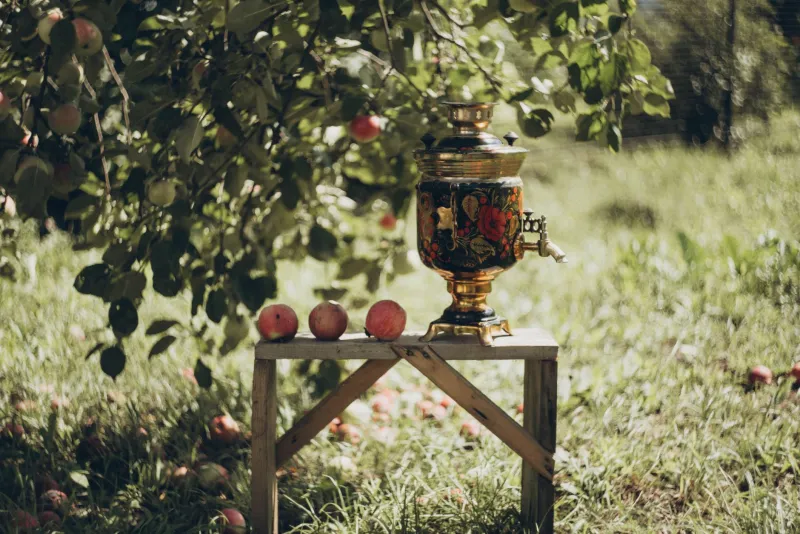
Let's get one thing straight before we go any further: if you have ever, even once, filled a mug with tap water and microwaved it to make tea, there is a Russian grandmother somewhere in the universe who just felt a chill. She doesn't know why. But she felt it.
Tea culture in Russia is one of those things that's hard to explain to Americans without sounding slightly dramatic. And yet, once you understand it, you realize the drama is entirely justified.
It's Not a Drink. It's a Ritual.
In the United States, tea is mostly a utility. You grab a bag, dunk it in hot water, wait approximately forty-five seconds, and move on with your life. Maybe you add ice. Maybe you buy it in a plastic bottle from a gas station. It gets the job done.
In Russia, that approach would qualify as a minor act of cultural violence.
The Russian relationship with tea — or чай (pronounced chai, yes, like the thing you order at Starbucks, though please don't bring that up) — goes back centuries. Tea arrived in Russia via trade routes from China in the 1600s, and the country never really recovered. By the 19th century, the samovar, a large ornate vessel used to heat water and keep it perpetually hot, had become the centerpiece of domestic life. Families gathered around it. Deals were struck over it. Arguments were had, tears were shed, and reconciliations were made — all in the presence of a slowly steaming samovar.
That legacy doesn't just disappear because someone invented the Keurig.
The Water Temperature Thing Is Very Real
Ask any Russian about tea preparation and the conversation will eventually, inevitably, arrive at water temperature. This is not negotiable territory.
Proper Russian tea requires water that has been brought to a full boil — not a simmer, not a near-boil, not whatever the microwave decides is close enough. The water must boil, full stop. Then, depending on the type of tea, it may need to cool slightly before steeping. Black tea, which dominates Russian households, typically gets water right off the boil. Delicate green teas get a little breathing room.
The logic isn't snobbery for its own sake. Boiling water properly kills bacteria, extracts flavor compounds more effectively, and — according to generations of Russian tea drinkers who will not be argued with — simply tastes better. The microwave, by contrast, heats unevenly and can't guarantee a true boil. To a Russian, that's not tea. That's hot brown disappointment.
Iced Tea: The Conversation Ender
If microwaved tea earns a look of pity, iced tea earns genuine confusion.
The American love of iced tea — especially the sweet, syrupy Southern variety that comes in a gallon jug — registers to most Russians as a category error. Tea is meant to warm you, comfort you, slow you down. Pouring it over ice and gulping it with a burger is a bit like using a violin as a baseball bat. Technically possible. Deeply baffling.
This isn't to say cold drinks don't exist in Russian culture. Kvas, kompot, mors — there's no shortage of chilled beverages. But tea occupies a specific, almost sacred role in the warm-drink category, and crossing it into iced-beverage territory feels, to many Russians, like a category violation.
That said, younger Russians and Russian-Americans are a little more flexible on this point. Don't tell their grandmothers.
The Tea Bag Debate (It's Complicated)
Here's where things get nuanced. Tea bags are not entirely absent from Russian kitchens — brands like Lipton and Greenfield are widely used, and nobody's pretending otherwise. But the ideal, the gold standard that every Russian household aspires to, is loose-leaf tea brewed in a small teapot called a заварочный чайник (zavárochny chaínik), then diluted to taste with hot water from the samovar or kettle.
The method produces a concentrate — strong, dark, intensely flavored — that each person adjusts in their own cup. More water for a lighter cup. Less for something that'll keep you awake until Thursday. It's a customizable system that somehow feels more communal than anything involving individual pods and a machine that sounds like it's sighing at you.
The tea bag isn't evil in Russian households. It's just... a shortcut. And Russians have complicated feelings about shortcuts.
What Gets Served Alongside
Tea in Russia doesn't arrive alone. That would be rude.
The table typically includes something sweet — варенье (varénye), a thick jam made from whole fruits that gets stirred into the tea or eaten off a spoon; баранки (barankee), small ring-shaped bread rolls; maybe пряники (pryaniki), soft spiced gingerbread cookies. In more elaborate settings, there's cake. There's always cake if someone cares about you.
The tradition of drinking tea with a sugar cube held between the teeth — called вприкуску (vprikusku) — still exists in older generations. You sip the tea through the sugar rather than dissolving it in the cup. It sounds fussy until you try it, at which point it sounds like something you'll be doing forever.
Why Americans Are Actually Coming Around
Here's the thing: American interest in tea as a ritual rather than a transaction has been quietly building for years. The wellness movement pushed people toward matcha ceremonies and gongfu brewing. The pandemic sent millions of Americans into their kitchens with nothing but time and a desire for comfort. Suddenly, the idea of sitting down with a proper pot of tea and not looking at your phone for twenty minutes started sounding less like a foreign custom and more like a survival strategy.
Russian-Americans have noticed. Social media accounts dedicated to traditional Russian food and culture have grown steadily, with tea content performing surprisingly well. There's genuine curiosity — not just about the flavors, but about the pace of it. The way a Russian tea session creates a natural pause in the day. The way it turns a kitchen table into a place where things actually get talked about.
A Small Invitation
You don't need a samovar to start. A decent kettle, a tin of loose-leaf black tea (Assam or a Russian Caravan blend work beautifully), a small teapot, and a quiet fifteen minutes are enough to get you somewhere real.
Boil the water properly. Warm the teapot first by rinsing it with hot water. Add your leaves — about a teaspoon per cup — and let it steep for four to five minutes. Pour a small amount into your mug and dilute with more hot water to taste. Add a slice of lemon if you want to feel authentically Russian about it. Sit down. Don't rush.
The microwave will still be there when you're done. But you might not feel like using it.