Праздность: The Guilt-Free Russian Approach to Doing Absolutely Nothing
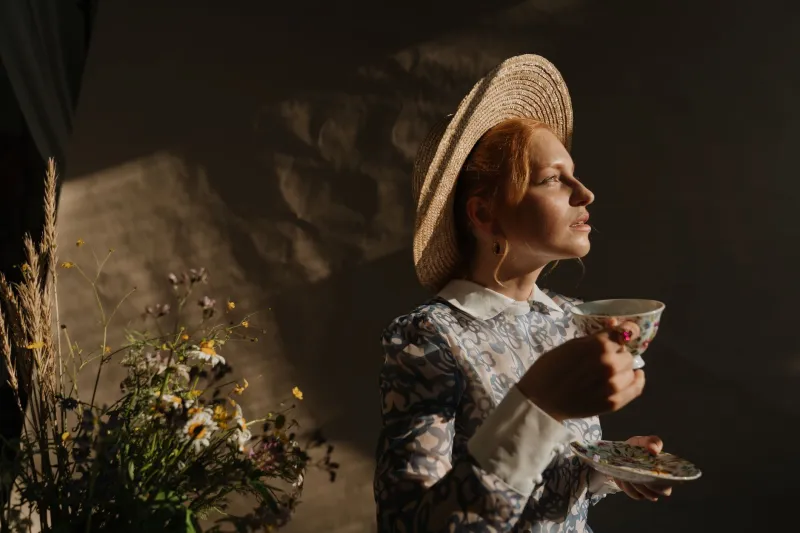
Let's be honest for a second. When was the last time you sat on your porch — or your stoop, or your apartment balcony — and did absolutely nothing? Not scrolling. Not podcasting. Not "quietly multitasking." Just... sitting. Existing. Letting the afternoon go wherever it wanted without you trying to optimize it?
If you're drawing a blank, you might need a word you probably don't have yet: праздность (prazdnost).
Roughly translated, праздность means purposeful idleness — a kind of deliberate, unapologetic leisure that has nothing to prove and nowhere to be. It's not laziness. It's not burnout recovery. It's not a productivity hack you discovered in a Medium article. It's something Russians have quietly practiced for centuries, tucked between long meals, unhurried conversations, and afternoons that stretch like warm taffy.
And somehow, Silicon Valley just figured out it's worth paying for.
What Праздность Actually Means (And What It Doesn't)
The word itself comes from the Old Slavic root праздный — meaning empty, unoccupied, free. But here's where the cultural nuance kicks in: in Russian tradition, that emptiness isn't a void to be filled. It's a space to be inhabited.
Pраздность isn't about being unproductive. It's about being fully present in a moment that isn't attached to output. Think of it as the philosophical opposite of the American side hustle. Where hustle culture says your free time is wasted potential, праздность says your free time is the point.
Russian literature is soaked in this idea. Oblomov, Goncharov's famously horizontal protagonist, spent most of a novel in bed — and Russian readers have been debating whether that's tragedy or wisdom ever since. Chekhov's characters sit in gardens and talk about nothing in particular for entire acts. Tolstoy's aristocrats stare out windows for pages. Western readers often find this maddening. Russians find it deeply relatable.
Meanwhile, in America...
Right now, somewhere in a coastal city, someone is paying $49 a month for a mindfulness app, $120 for a "digital detox weekend," and possibly $500 for a multi-week "slow living" program that teaches them to — and this is real — sit quietly and notice their surroundings.
The global wellness industry crossed $5.6 trillion. A significant chunk of that is Americans trying to purchase their way back to a state of being that most cultures never abandoned in the first place.
And look, no judgment. The hustle is baked into American identity at a cellular level. "What do you do?" is the first question at every party. Busyness is a status symbol. Rest is something you earn, not something you simply take. Even vacations get optimized — itineraries packed, photos posted, experiences checked off like line items on a quarterly report.
Pраздность doesn't work like that. You can't schedule it into a Google Calendar block labeled "Leisure (Strategic)." The moment you try, it evaporates.
How Russians Actually Do It
Here's the thing about праздность in practice: it's incredibly social, and it's incredibly ordinary.
It looks like two people sitting at a kitchen table with tea that's gone slightly cold, talking about something that doesn't matter and not minding at all. It looks like a walk that has no destination, taken not for steps or cardiovascular benefit, but because the evening is nice and the conversation is easy. It looks like a Sunday afternoon that simply unfolds — food appears, people arrive, someone puts on music, no one checks the time.
Russian culture has always made space for the long meal. Not the trendy "slow food" movement — just the actual tradition of sitting at a table for three hours because you're enjoying yourself and no one has anywhere better to be. The застолье (zastolye), or feast-gathering, isn't about the food so much as the atmosphere of unhurried togetherness. You linger. You refill glasses. You argue gently about something that happened in 1987. It's not efficient. It's not supposed to be.
Babushkas perfected this without a single wellness coach. They sat. They watched. They knitted, or didn't. They drank tea and looked out windows and let the day come to them rather than chasing it around with a productivity timer.
The Guilt Is the American Part
Here's what makes праздность genuinely foreign to most Americans: there's no guilt attached to it.
In the American framework, rest requires justification. You rest because you worked hard. You relax because you earned it. You take a break so you can be more productive later. Even the language of self-care — recharge, reset, optimize recovery — frames rest as a means to an end.
Pраздность doesn't justify itself. It simply is. And that's the part that's genuinely hard to import.
When Russian immigrants talk about adjusting to American life, the pace is almost always in the top three culture shocks. Not the language, not the food — the relentless forward motion. The sense that stillness is suspect, that a quiet afternoon is a wasted one, that you should always be becoming something rather than simply being something.
Can You Actually Learn This?
Maybe. But probably not from an app.
The honest starting point is just... trying it once without a framework around it. Sit somewhere without your phone for twenty minutes. Don't call it meditation. Don't track it. Don't post about it. Just let it be a Tuesday afternoon where you happened to sit outside.
If that feels unbearable — and for a lot of Americans, it genuinely does — that discomfort is the thing worth examining. Not with a therapist necessarily, but with yourself, over tea, without an agenda.
There's a reason the Russian language has a word for this and English doesn't. Language encodes what a culture values. English gave us productivity, efficiency, hustle. Russian gave us праздность, тоска, and душа — words for inner states, for the texture of time, for what it feels like to simply exist in a moment.
Maybe that's the real lesson here. Not that Russians have it all figured out — they'd be the first to tell you they don't — but that they've held onto something Americans quietly gave away somewhere around the Industrial Revolution and have been trying to buy back ever since.
Your babushka didn't need a $500 program. She just needed a window, a cup of tea, and nobody telling her she was wasting time.
That, in the end, is праздность. And it's still free.