Горчичники and Gut Feelings: Why Russian Grandmothers Were Doing Functional Medicine Before It Had a Name
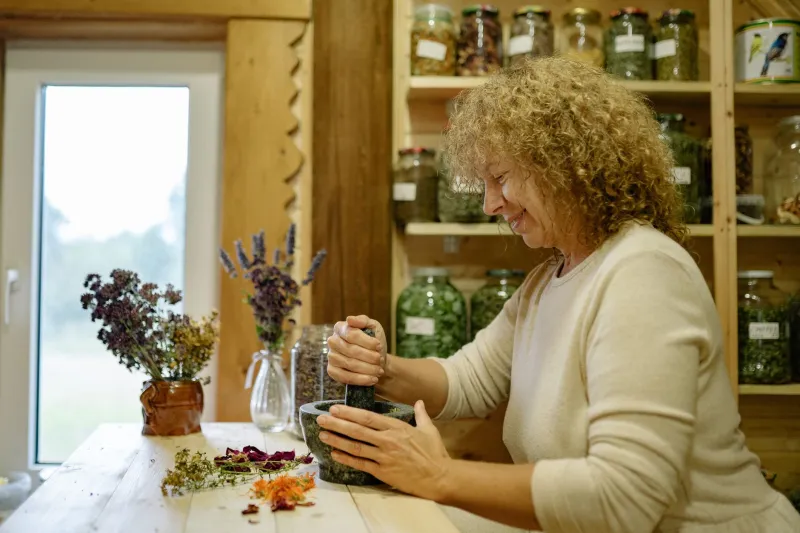
You come home sniffling. Maybe your throat is scratchy, your head feels like it's wrapped in wet wool. In an American household, the first instinct is to open a browser tab and spiral into a WebMD rabbit hole that ends with you convinced you have either a mild cold or a rare autoimmune disorder — no in-between.
In a Russian household, Babushka is already in the kitchen. She hasn't asked any questions yet, but she's boiling water.
This is the thing about Russian grandmothers that's genuinely hard to explain until you've witnessed it firsthand: they don't diagnose by Googling. They diagnose by knowing. And somehow, a lot of the time, they're right.
The Original Symptom Checker Had a Name, and She Smelled Like Herbs
Russian folk medicine — народная медицина (narodnaya meditsina) — is not some fringe belief system. It's a deeply practical, centuries-old tradition built from necessity. For much of Russian history, professional doctors were either unavailable, unaffordable, or simply not trusted. What families had instead were grandmothers, and grandmothers had time, observation, and a pantry that doubled as a pharmacy.
The knowledge passed down wasn't random. It was accumulated, tested across generations, and refined. Your great-grandmother tried something on her kids. It worked. Her daughter remembered it. Her daughter remembered it. By the time Babushka is pressing a mustard plaster to your chest, she's carrying about 150 years of clinical trial data — informal, yes, but not nothing.
And American readers are starting to pay attention. Whether it's a Russian coworker who swears by black radish with honey for a cough, or a mother-in-law who insists on rubbing vodka on a fever, the curiosity is real. What do these women actually know?
Let's Talk About the Mustard Plaster (Горчичник)
If you grew up in a Russian family, you've had a горчичник (gorchichnik) slapped on your back at least once. These little paper-and-mustard packets get soaked in warm water and applied directly to the skin — usually the chest or back — to draw out congestion through heat and mild irritation.
Modern medicine gives this one a cautious thumbs up. The warming effect does genuinely increase circulation to the area, which can help loosen mucus and ease respiratory discomfort. Babushka didn't know about vasodilation. She just knew it worked.
Same goes for the classic malina (raspberry jam) tea for fevers. Raspberries contain salicylates — the same compound family as aspirin. When you brew strong black tea, stir in a generous spoonful of raspberry jam, and sweat it out under three blankets, you're essentially doing a very cozy, very Russian version of taking a fever reducer. Nobody in that kitchen was thinking about salicylates. They were just doing what their mother did.
An Herb for Every Ailment, and Babushka Knows All of Them
The herbal knowledge alone could fill a textbook. Russian grandmothers maintain a mental catalog of plants and their uses that would impress any herbalist:
- Ромашка (romashka / chamomile): Not just for sleep. Babushka uses it for stomach upset, sore throats, skin irritation, and as a rinse for irritated eyes. Modern research backs most of this up.
- Шиповник (shipovnik / rose hip): Brewed into a tea or syrup, it's the go-to immune booster. It's also one of the richest natural sources of Vitamin C on the planet. Coincidence?
- Валериана (valeriana / valerian root): Anxiety, insomnia, nervous tension — Babushka has a tincture for all of it, and Western medicine has spent decades studying valerian's sedative properties.
- Зверобой (zveroboi / St. John's Wort): Long before it appeared in American health food stores as a supplement for mild depression, Russian grandmothers were brewing it as a tea for exactly that purpose.
This isn't magic. It's ethnobotany — the study of how cultures use plants medicinally — and Russian folk tradition is one of the richest archives of it in the world.
The Diagnostic Instinct Is Real, and It's Earned
Here's what gets overlooked in conversations about folk medicine: it's not just the remedies that are impressive. It's the assessment. Babushka looks at you — actually looks at you — and notices things. The color of your skin. Whether your eyes look glassy. How you're holding your shoulders. The sound of your cough. Whether you ate your breakfast.
This is clinical observation, the same skill that good doctors spend years developing. Russian grandmothers developed it by raising children in environments where you couldn't always call a doctor, so you had to pay close attention.
There's a Russian phrase worth knowing here: «Лечи подобное подобным» — roughly, "treat like with like." It's an old folk principle, and while it doesn't map perfectly onto modern medicine, the underlying idea — that you treat the whole person, not just the symptom — sounds a lot like what integrative medicine practitioners are saying right now.
What Americans Are Actually Learning From This
The renewed interest in Russian home remedies among American readers isn't just nostalgia or wellness trend-chasing. It's a reaction to something real: the frustration of a healthcare system that often treats symptoms in isolation, discourages slow observation, and sends you home with a printout instead of a conversation.
What Babushka offers is the opposite of that. She's unhurried. She watches. She makes you tea and sits with you. Half the time, the remedy might be the sitting.
That said — and this matters — not every folk remedy is benign, and not every Babushka is right. Some traditional practices involve ingredients that can interact with medications or shouldn't be used in certain situations. The wisdom is real, but it benefits from being in conversation with modern medicine, not in competition with it.
The best Russian-American households seem to have figured this out intuitively. You go to the doctor and you drink the rose hip tea. You take the prescribed medication and you let Babushka make the soup. Nobody has to lose.
The Pantry as Medicine Cabinet
What's genuinely fascinating about this tradition is how low-tech and accessible it is. No supplements, no subscription boxes, no $40 adaptogen powders. Honey, garlic, herbs, steam, warmth, and rest. Things that have been available to ordinary people for centuries.
There's something almost radical about that in 2025, when the wellness industry is worth hundreds of billions of dollars and still hasn't figured out that sometimes the answer is hot water with lemon and someone who loves you telling you to lie down.
Babushka figured that out a long time ago. She just never made a podcast about it.
Curious about specific Russian folk remedies or the herbs mentioned here? Drop a comment below — we'd love to know what your family swears by.