Step Over the Threshold, Not the Drama: Russian Superstitions That Sound Crazy Until They Don't
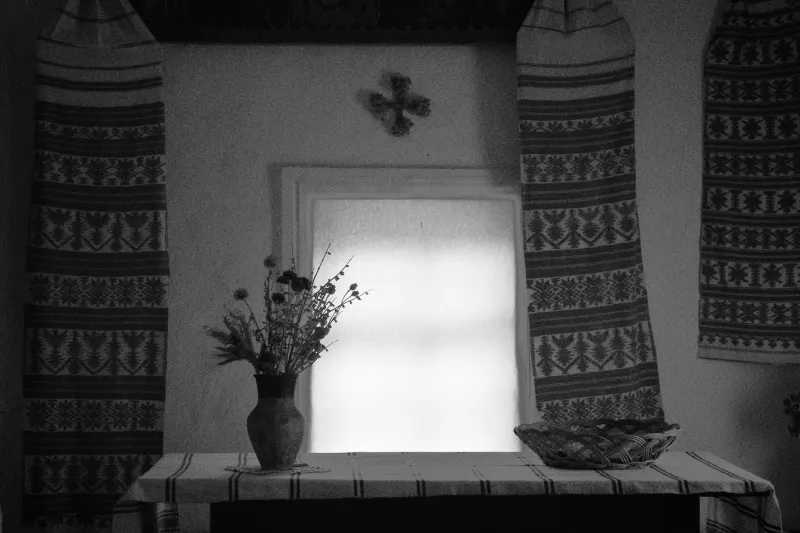
The first time Natasha M., a Russian-American living in Chicago, refused to hand her coworker a birthday gift at the door — actually walked inside the apartment first, then turned around and handed it over — her coworker stood there blinking for a solid five seconds.
"She thought I was being dramatic," Natasha laughs. "I tried to explain. She still thinks I'm a little dramatic. But I cannot shake hands across a doorway. I physically cannot do it."
If you've spent any real time with Russians or Russian-Americans, you've probably run into this kind of moment. A strange pause. A small ritual. A look of mild alarm when someone tries to give them a set of kitchen knives as a housewarming gift. To outsiders — and especially to Americans, who tend to treat superstition as something you either fully believe in or fully mock — it can read as irrational, or at the very least, a little extra.
But here's the thing: Russian superstitions aren't really about believing in magic. They're about something older and more interesting than that.
The Doorway Problem (And Why It's Bigger Than You Think)
Let's start with the doorway, because it comes up constantly. In Russian tradition, a threshold — порог (porog) — is not just an architectural feature. It's a boundary between worlds, between the familiar and the unknown, between your protected domestic space and whatever chaos lives outside. Ancient Slavic belief held that household spirits (domovye) lived near the threshold, and disturbing that space — especially during greetings or farewells — invited bad energy into the exchange.
So when a Russian refuses to shake your hand across the doorway, they're not being weird. They're honoring, consciously or not, the idea that some spaces deserve a certain kind of respect.
Dmitri K., who moved from St. Petersburg to Seattle twelve years ago, says he's mostly let go of the big superstitions but this one has stuck. "It's like a reflex. Someone reaches their hand through the door frame and my arm just... stops. My American wife has given up asking."
Knives, Mirrors, and the Terror of an Empty Bucket
The knife thing deserves its own paragraph, because it genuinely surprises people. In Russian culture, gifting a knife (or scissors, or really any sharp object) is believed to sever the relationship between giver and receiver. The workaround? The recipient gives back a small coin — even a penny works — so the transaction technically becomes a purchase, not a gift. Problem solved. Friendship preserved.
It sounds elaborate. But think about it: how many American gift-giving customs are equally arbitrary? We just don't notice them because they're ours.
Then there's the mirror thing. Breaking a mirror means seven years of bad luck — okay, that one Americans know too. But Russians also believe you shouldn't look into a broken mirror at all, and that mirrors in a home where someone has recently died should be covered. The mirror, in Slavic folk belief, is a portal. It holds reflections, and reflections hold something of the soul.
And then there's the empty bucket. If you cross paths with someone carrying an empty bucket or pail — especially first thing in the morning — your day is about to go sideways. Full buckets mean abundance. Empty ones mean lack. This one has its roots in very practical, pre-modern Russian village life, where water was scarce and a full bucket meant someone had done the work. An empty one meant something had gone wrong.
Marina V., a food blogger in New York who grew up in Novosibirsk, says the empty bucket superstition is the one that gets the most confused reactions from Americans. "I was walking to a coffee shop once and a maintenance guy came out with an empty mop bucket and I just — I paused. My friend was like, 'what are you doing?' I couldn't even explain it properly."
The Whistling Ban (Yes, Really)
Don't whistle indoors. This one is non-negotiable for a lot of Russians, and it baffles Americans to no end. The belief: whistling inside the house will whistle your money away. Some versions say it invites evil spirits. Others say it just brings general misfortune.
The origin is probably nautical — sailors believed whistling could summon storms — but the superstition spread inland and stuck around through centuries of Russian folklore. Today, plenty of Russian-Americans who don't consider themselves superstitious at all will still feel a faint unease when someone starts whistling in a kitchen.
"I don't actually believe it," admits Alexei P., a software engineer in Austin who grew up in Moscow. "But I also don't whistle inside. Why tempt it?"
That phrase — why tempt it — might be the most honest summary of how a lot of Russian-Americans relate to these traditions.
What It's Really About
Here's where it gets interesting from a cultural psychology angle. Russia's history is, to put it gently, not a gentle history. Centuries of invasion, famine, political upheaval, and the particular grinding uncertainty of Soviet life created a culture with a very specific relationship to fate. You don't taunt fate. You don't assume things will go well. You take the small precautions available to you, because you've learned — collectively, generationally — that the universe does not owe you a smooth ride.
American culture, by contrast, was built on a certain optimism. Manifest destiny, pulling yourself up by your bootstraps, the whole thing. We tend to believe that positive thinking helps and that worrying about bad luck is a waste of energy.
Russians tend to believe the opposite: that acknowledging the possibility of bad luck is what keeps you protected from it. That a little ritual, a small gesture of respect toward the unknown, is just good sense.
Neither worldview is wrong. They're just different bets about how the universe operates.
The Ones That Stayed
Ask any Russian-American which superstitions they've kept and which they've dropped, and you get a fascinating portrait of cultural negotiation. Most have abandoned the stricter ones — few are still sitting down for a moment of silence before a long journey, a tradition meant to let the household spirits say goodbye. But the doorway handshake thing? The knife coin exchange? The knocking on wood (which Russians do three times, not once, thank you very much)? Those tend to stick.
Natasha, back in Chicago, puts it this way: "The ones I kept are the ones that feel like they're about relationships. About not being careless with people. The knife thing — you give a coin so the gift doesn't cut the friendship. That's not really about magic. That's about paying attention."
Maybe that's the real argument for Russian superstitions. Not that the spirits are real or that an empty bucket will curse your Tuesday. But that these rituals build in moments of mindfulness. They make you pause at the threshold. They make you think about what you're giving and what it means.
In a culture that moves fast and breaks things, a little enforced pause at the doorway doesn't sound so paranoid after all.
Have a superstition your American friends think is absolutely unhinged? Tell us about it in the comments — we're collecting the best ones.