Dirt Under Your Nails and Pickles in the Cellar: The Russian Dacha Life Americans Are Finally Waking Up To
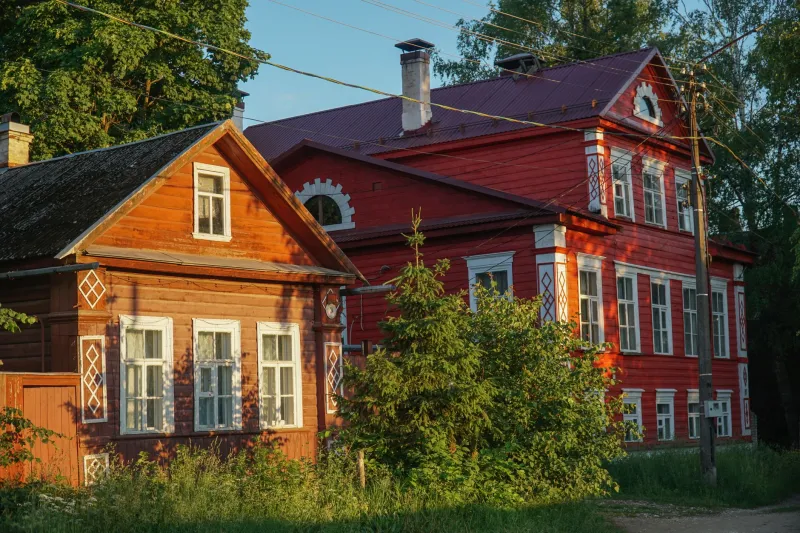
Picture this: It's a Friday evening in Moscow. The metro is packed. Half the passengers are clutching canvas bags stuffed with seedlings, empty glass jars, and the occasional hand-hewn wooden tool that looks like it predates the Soviet Union. These are not people heading to a farmers market. These are people heading to their dacha — and nothing, not deadlines, not traffic, not even a late spring frost, is going to stop them.
The word dacha (да́ча) loosely translates to "country house," but that translation does it almost zero justice. A dacha is less a place and more a state of mind. It's where city-weary Russians go to dig, plant, sweat, argue about tomato varieties, and ultimately feel like themselves again. And if you squint a little, you'll notice that Americans are currently spending a lot of money on Pinterest boards and podcast subscriptions trying to figure out something that Russian families have quietly been doing for centuries.
What Exactly Is a Dacha, Anyway?
The dacha tradition stretches back to the 18th century, when Peter the Great started handing out plots of land outside St. Petersburg to noblemen and court officials. The word itself comes from the verb давать (davat') — to give. So historically, a dacha was literally something that was given to you by the state.
Fast forward through a few revolutions and a world war or two, and the Soviet government leaned hard into the dacha concept — not as a luxury, but as a practical solution to chronic food shortages. Ordinary workers were allocated small plots, typically around 600 square meters (about a sixth of an acre), where they could grow vegetables to supplement whatever the state stores happened to have in stock that week. The dacha stopped being a privilege and became a lifeline.
Today, an estimated 60 percent of Russian families have access to a dacha or garden plot of some kind. The motivations have shifted — it's less about survival now and more about connection, tradition, and honestly, some of the best tomatoes you'll ever eat in your life — but the culture remains as intense as ever.
The Garden Is Not Optional
Here's the thing Americans sometimes miss when they romanticize the dacha: it is not a relaxing weekend getaway in the way that, say, a cabin in Vermont is. You are not sitting on a porch with a cold drink watching the fireflies. You are working. You are weeding at 6 a.m. You are debating whether the cucumbers need more water. You are learning, from your grandmother, the precise moment to harvest dill so it doesn't get bitter, and you are being corrected when you get it wrong.
Russians grow an astonishing variety of produce at their dachas — tomatoes, cucumbers, zucchini, beets, potatoes, carrots, garlic, currants, gooseberries, strawberries, and more herbs than most American grocery stores carry. And crucially, what they grow, they preserve. The dacha season doesn't end when summer does. It ends when the last jar of pickled cucumbers is sealed, the last pot of jam is labeled, and the root cellar is stocked for winter. Zagotovki — preserved foods — are practically a competitive sport.
There's a Russian saying worth knowing here: «Что летом родится, то зимой пригодится» — What is born in summer will come in handy in winter. It's the kind of proverb that sounds quaint until you actually spend a winter eating tomatoes you grew yourself in August, and then it sounds like the wisest thing anyone has ever said.
Self-Sufficiency as a Cultural Value
The dacha isn't just about food. It's about a particular relationship with the land — one that's deeply embedded in the Russian psyche in a way that's hard to overstate. Russians have a complicated, sometimes brutal history with food security, and the instinct to grow your own, preserve your own, and rely on yourself runs bone-deep in a lot of families.
This isn't the same as American rugged individualism, exactly. The dacha is intensely communal. Neighbors share seeds, trade excess produce, help each other build fences. Your grandmother teaches your kids how to can tomatoes. Your uncle shows up with a rototiller and stays for three days. The self-sufficiency is collective — a village operating inside a city culture.
There's also something quietly environmental about it, even if Russian dacha culture doesn't always frame it that way. Composting is standard. Chemical inputs are minimal on most small plots — partly by tradition, partly because Babushka doesn't trust pesticides and she's not about to start now. Food waste is nearly nonexistent when you've spent three months growing something.
Meanwhile, in America...
Here's where it gets interesting. Over the past decade, the American homesteading movement has exploded. Seed companies are reporting record sales. Urban farming nonprofits are popping up in cities from Detroit to Denver. Regenerative agriculture is having a full cultural moment — there are documentaries, bestselling books, and enough Instagram accounts dedicated to sourdough and heirloom vegetables to fill a small library.
And the values driving all of it? Self-sufficiency. Reconnecting with food sources. Reducing dependence on industrial supply chains. Preserving traditional knowledge. Teaching kids where food actually comes from. Sound familiar?
The American version tends to come packaged with more aesthetic branding — the linen aprons, the artisanal canning labels, the carefully curated cottagecore aesthetic — but underneath all that, it's chasing the same thing that a Moscow accountant is chasing when she piles into a commuter train on Friday night with a bag full of seedlings. Meaning. Groundedness. The satisfaction of feeding your family something you pulled out of the earth with your own hands.
What Americans Could Actually Learn From the Dacha Model
A few concrete things worth borrowing:
Start with preservation, not just production. American home gardeners often grow more than they can eat fresh and then watch it go to waste. Russian dacha culture treats preservation as inseparable from growing — you plan your garden around what you intend to jar, ferment, or dry. Learning basic pickling and jam-making transforms a good harvest into a year-round resource.
Make it multigenerational. The dacha works partly because it's not one person's solo project. It's a family institution. Getting kids and grandparents involved isn't just wholesome — it's how traditional knowledge actually survives.
Embrace the unglamorous parts. The dacha is dirty, physical, and occasionally humbling. The American homesteading aesthetic sometimes sanitizes that reality. Real growing is full of failed crops, pest invasions, and moments where you question every decision you've made. That's the point. It keeps you honest.
Think in seasons. Russian dacha culture operates on a deeply seasonal rhythm — planting schedules, harvest windows, preservation timelines. Reconnecting with that rhythm, even in a small backyard or a community garden plot, changes how you relate to food in ways that no grocery store ever could.
A Final Word on Tomatoes
If you ever visit a Russian family with dacha access in late August, you will be given tomatoes. You will be told these are the best tomatoes in the world. You will be shown photographs of previous years' tomatoes for comparison. You will, if you are wise, agree enthusiastically — because honestly, they're probably right.
There is something about a tomato grown in a small garden plot by someone who has been doing this their whole life, using seeds saved from last year's best fruits, in soil that's been composted and tended for decades, that no industrial tomato can touch. That's not nostalgia talking. That's just what happens when you take food seriously.
And maybe that's the real lesson of the dacha, the one that translates perfectly across cultures and time zones: when you put real care into the ground, the ground gives it back.