Don't You Dare Hand Her Twelve Roses: The Unwritten Russian Rules That Will Make or Break Any Social Situation
So you showed up to your Russian coworker's birthday party with a beautiful even dozen of yellow roses, whistling to yourself as you crossed the threshold — and the whole room went quiet. Nobody said anything. But something shifted. You felt it. You just didn't know what you'd done.
Welcome to the invisible rulebook.
Russian culture runs on a deep, ancient layer of folk belief that most people raised in it absorbed without ever being formally taught. These superstitions aren't fringe stuff — they're woven into daily life so thoroughly that even Russians who'll laugh and call themselves completely secular will still knock on wood, spit over their left shoulder, or pause before sitting on a suitcase before a trip. It's muscle memory, practically. And if you're an American navigating a Russian-American friendship, relationship, or family dinner, knowing even a handful of these rules can be the difference between a warm welcome and a very polite, very cold goodbye.
The Flower Thing Is a Whole System, Not Just a Number
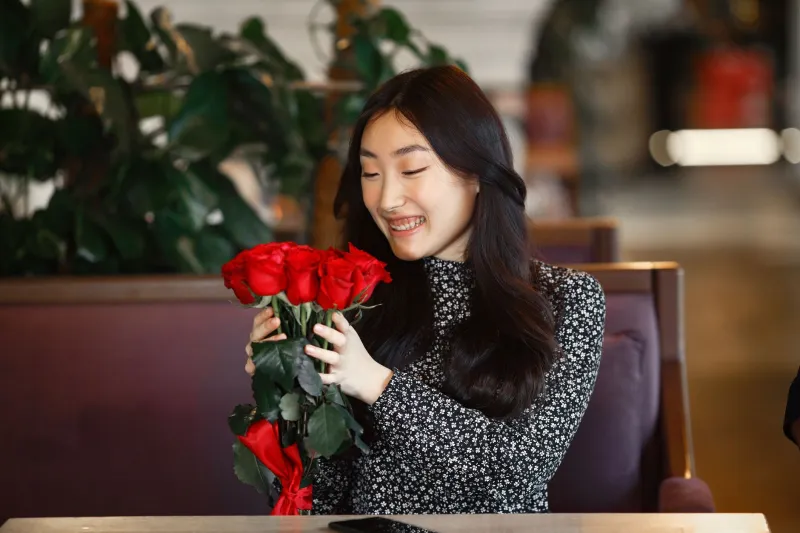
Let's start with the roses. In Russian tradition, even numbers of flowers are for funerals. Full stop. You bring an even bouquet to a grave. So walking into someone's birthday, anniversary, or housewarming with ten or twelve stems — however gorgeous — is basically announcing, symbolically, that you associate this occasion with death. It's not intentional, and most Russians will understand that you didn't know. But they'll notice. Every single one of them.
The rule: always give an odd number. One, three, five, seven — the bigger the bunch, the better, as long as the count is odd. And while you're at it, avoid yellow flowers if you can. Yellow blooms carry their own baggage in Russian folk belief, often linked to separation, infidelity, or the end of a relationship. Stick with red, pink, or white and you're golden. Literally.
The Doorway Is Not a Neutral Zone
Here's one that catches Americans completely off guard: do not shake hands, exchange gifts, or pass anything — including a baby, technically — across a doorway threshold. The doorway in Slavic folk tradition is a liminal space, a boundary between worlds. Shaking hands across it invites conflict and bad energy into the relationship.
If you're at a Russian home and someone comes to the door, they'll almost always step aside and gesture you fully inside before any greeting ritual happens. It can feel overly formal to American eyes, or even awkward if you're just dropping something off quickly. But this isn't ceremony for ceremony's sake — it's a deeply ingrained spatial instinct. When in doubt, step all the way in before you extend your hand.
Sitting Before a Journey (And Why Everyone Has to Do It)
You're about to drive a Russian friend to the airport. She's packed, the bags are by the door, and then — she sits down. Just sits. For about thirty seconds, silently. Maybe the whole family does it. Then everyone gets up and leaves without comment.
This is prisest' na dorozhku — sitting before the road. It's a pre-departure ritual believed to bring safe travel and good luck. The idea is that sitting briefly confuses any evil spirits who might be tracking your movements, or alternatively, gives the traveler a moment to mentally check that nothing important has been forgotten. In practice it's become so habitual that many Russian families do it automatically, the way Americans double-check their pockets for their keys and wallet.
If you're in the room, sit down with them. Don't stand there looking at your watch. It takes thirty seconds and it means a lot.
The Whistle and the Empty Wallet
Whistling indoors is considered bad luck in Russian tradition — specifically, it's said to whistle away your money. The saying goes roughly: whistle indoors and you'll whistle away your fortune. Is it rational? No. Will your Russian grandmother give you a look that could strip paint if you do it in her kitchen? Absolutely yes.
This one matters in American contexts because casual indoor whistling is pretty common here. People whistle while they cook, while they scroll, while they do basically anything. If you're spending time in a Russian household, it's worth filing this one away. You won't be thrown out, but you might get a sharp "don't do that" and a brief explanation that feels disproportionate to the crime.
The Mirror, the Salt, and the Uninvited Guest
A few more quick ones worth knowing:
Broken mirrors carry the same seven-years-bad-luck reputation they do in Western folklore, but in Russian tradition the concern runs deeper — a broken mirror in the home is seen as a bad omen for the household itself, not just the person who broke it. Expect it to be taken seriously.
Spilling salt is an old harbinger of conflict or quarrel. If it happens at a Russian dinner table, you may see someone immediately throw a pinch over their left shoulder. It's a reflex. Don't make it weird by asking about it.
Returning home for something you forgot is considered bad luck — you're essentially crossing back through that threshold you already left, which invites trouble. If a Russian friend absolutely has to go back for their forgotten phone, they'll look in a mirror before leaving again. It resets the energy, supposedly. Americans who don't know this sometimes wonder why their Russian roommate is staring at the hallway mirror before dashing back out the door.
Why These Rules Still Matter in 2024
It would be easy to write all of this off as charming old-world superstition with no real relevance. But that would miss the point. These beliefs function as social glue. They're shared codes that signal belonging, care, and attention. When an American takes the time to bring an odd number of flowers, or pauses at the doorway, or sits down before a trip — even without fully believing in the underlying folklore — it registers as respect. It says: I took the time to learn something about your world.
And in a Russian-American social context, that kind of small, deliberate gesture can open more doors than almost anything else. (Just make sure you walk all the way through before you shake hands.)
Russian superstitions aren't about fear — they're about attention. Paying attention to thresholds, to numbers, to the direction of the wind before you speak. There's something almost poetic about a culture that built so much meaning into the everyday act of handing someone flowers. It turns even the smallest gesture into a statement.
Just make sure yours says the right thing.